
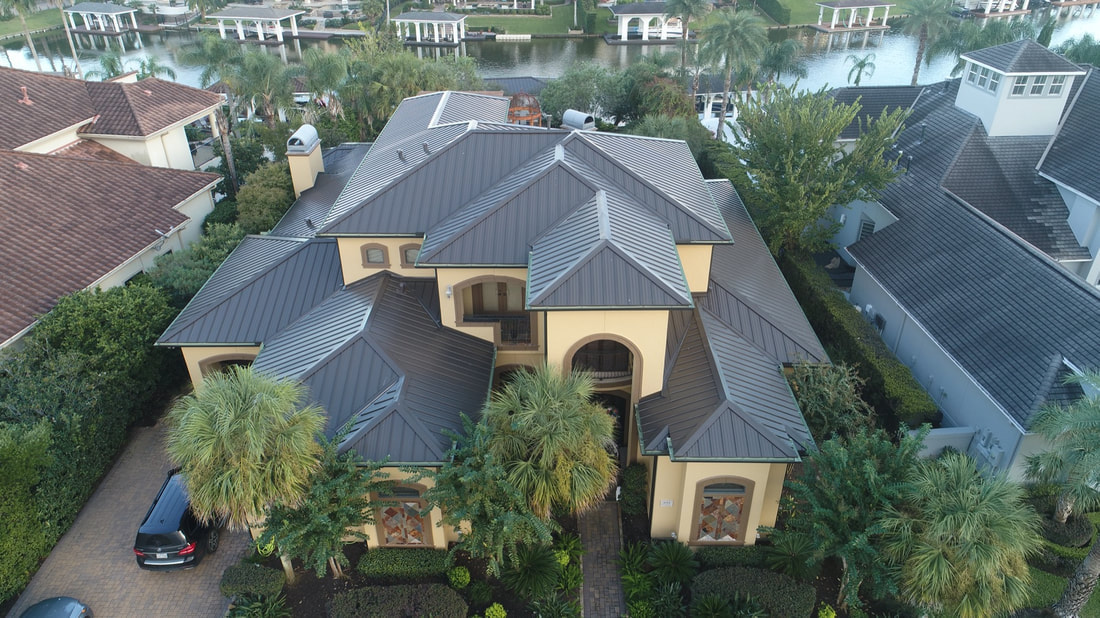
Compare appearance, installation details and best uses of standing seam panels and interlocking metal shingles
Two metal roofs can look completely different
Standing seam and metal shingles are both metal roofing, but they create very different architecture. Standing seam emphasizes clean vertical lines and broad uninterrupted surfaces. Metal shingles can reproduce the smaller scale and shadow lines of slate, wood shake or tile.
The right choice should suit the proportions of the house, the roof pitch and the homeowner's design goals.
How standing seam works
A standing seam roof is formed from long panels joined at raised seams. In a concealed-fastener system, clips or hidden attachment points secure the panels while permitting controlled thermal movement. Fewer horizontal joints can be helpful on long roof planes, but panel fabrication and flashing quality remain critical.
- Contemporary, crisp appearance
- Long continuous panels
- Concealed primary fasteners on appropriate systems
- A broad range of architectural colors
How metal shingles work
Metal shingles are smaller interlocking units. Depending on the product, they can resemble shake, slate or tile. Their scale can complement traditional homes and complicated roof shapes, while stamped profiles add depth that is not possible with a flat panel.
Compare the base metal, coating, fastening method, edge details and accessory system rather than assuming every metal shingle performs the same way.
Choose after seeing real installations
Small samples do not show how a color changes across a roof plane or how a profile looks from the street. Review full-roof photographs and aerial footage, then ask to see examples with architecture similar to your home. That is the strongest way to compare scale, texture and trim before committing.