
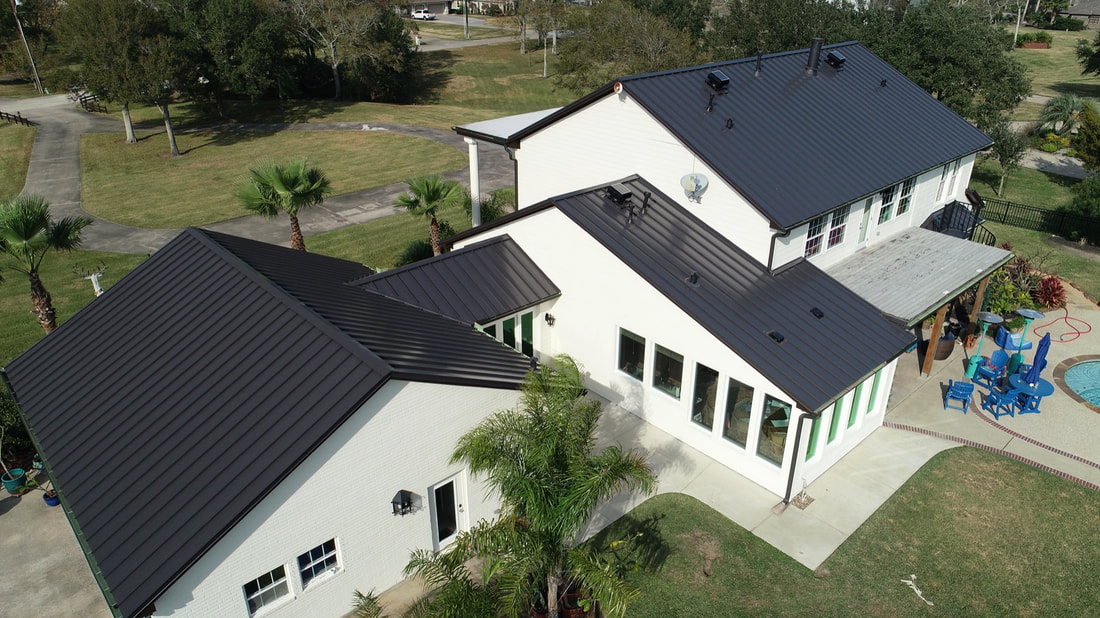
Clear answers to three common questions Houston homeowners ask about residential metal roofing
Myth one: every metal roof is loud in the rain
The sound of a roof depends on the complete assembly, not simply the exposed material. An open agricultural building with metal attached over framing sounds different from a residence with roof decking, underlayment, insulation, attic space and finished ceilings.
If sound is a concern, discuss the existing deck, attic insulation and proposed assembly. Do not judge a residential system by the sound of a barn or patio cover.
Myth two: all metal roofs rust quickly
Metal roofing products use different base metals and protection systems. Aluminum does not rust like steel. Roofing steel is commonly protected by a metallic coating and painted finish. Product selection, cut-edge treatment, drainage, compatible fasteners and avoidance of harmful metal combinations all matter.
Myth three: metal attracts lightning
A roof material does not make a home a target simply because it is metal. Lightning risk is influenced by location, height and surroundings. Metal is noncombustible, and a properly designed building assembly is different from the popular image of a roof acting like a magnet.
Questions about lightning protection for a particular property should be directed to a qualified lightning-protection professional.
Separate system facts from sales slogans
Ask how the roof handles thermal movement, how penetrations are flashed, whether primary fasteners are exposed or concealed and what maintenance the manufacturer recommends. A trustworthy comparison names the exact system and explains where details depend on the house.